
I rescued my music library from Google Play Music, just as Android's open door closes to a 24-hour waiting period.

This week, I successfully rescued 80GB of MP3s I uploaded back in 2011. Back then, I logged on to a beta service called Google Play Music. The company had offered me, a loyal user, to upload 20,000 music files, for free, to its cloud. It promised to have and to hold, through sickness and in health, and through transitions to YouTube Music.
I never actually went to YouTube Music during the great migration of 2021, when Google finally sunsetted Play Music. I ditched the platform after uploading my files and went back to Spotify, since I'd already set it up for streaming at the time. It was only recently that I realized a YouTube Premium subscription also gives me access to YouTube Music. And it was only a week ago that it occurred to me that the pre-populated playlists were from the legacy era of Google Play Music.
Downloading this music is like finding boxes in the attic full of cassette tape recordings I used to make in my bedroom when I was a kid; the nostalgia is a welcome return to my former self, cringe and all. Google Takeout, also introduced in 2011, allowed me to download all those music files in 2GB increments. I still have about 30 packets left to finish before the entire MP3 library is back in my possession, but so far the process has been frictionless. It's a reminder of what we used to have.
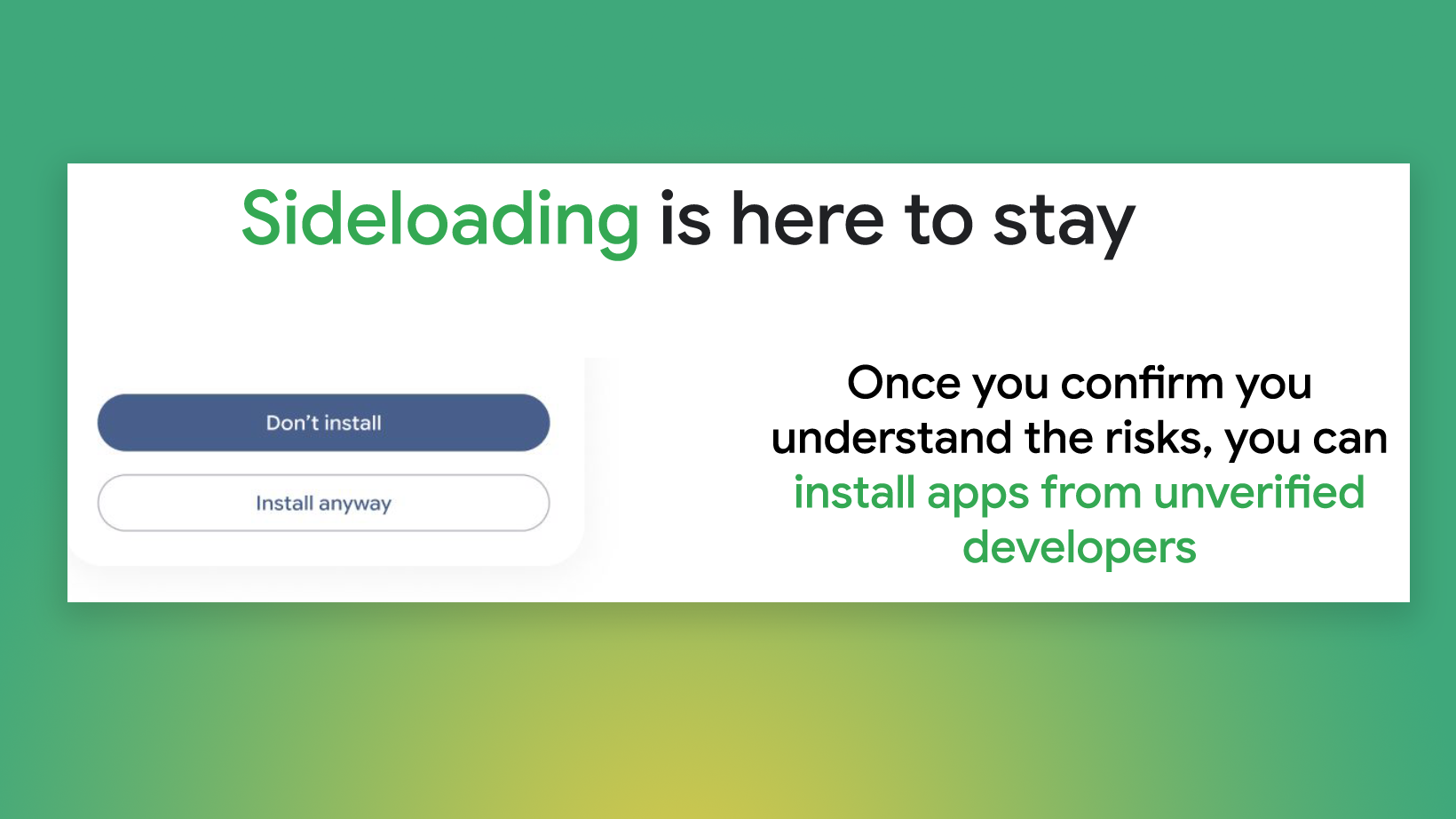
You know what's not going to be frictionless in the near future? Sideloading APKs. I thought it was interesting that this week, as I benefit greatly from the ethos of a past Google, we finally got an explanation of how the sideloading advanced flow will work on Android going forward. You can still install APKs as you want, but you'll have to enable Developer Options before you can even request it. Then, after performing the requisite seven taps to unlock the ability, you'll be forced to reboot and then wait 24 hours before the gates open. It's only after that you can decide whether to leave those gates open indefinitely or give it a week to fester before they're closed back up again.
Google's rationale for this new sideloading mechanism is that it will help stop the flow of banking scams that rely on this kind of backdoor. The waiting period could help prevent someone from being immediately coerced into installing a malicious app that could take over and ruin everything. But the switch is likewise a glaring reminder of the era we're headed into. We've gone from openly sideloading and installing apps as we please to essentially asking Google for permission to do so. It didn't used to be like this!
The version of Google that existed back then let me use its cloud storage for free and kept those files in a vault until I was ready to access them nearly a decade and a half later, while the version of Google in this timeline is closing itself up by making what used to be easy cumbersome. I know the terms for sideloading were going to be way more stringent than they are now—Google was originally floating the idea of charging developers and requiring an ID check before allowing anything—and that part of this is in response to major waves of malware, like Perseus, and pressure from international governments in Singapore and Brazil. But even a necessary safety net can feel like a cage if you're not used to it.
Happy Friday! Speaking of what's going on at Google, we got an inside look at what went into building the new Android benchmark, why Google says Gemini is ranking highest, and what else is on the horizon for Android developers. Huyen leads this interview with Google's Matthew McCullough. Check it out.
Huyen, Ron, and I are all a little green on the inside. This week's episode of Android Faithful says slainte!